Brotato
- 4.6
- Rating
- 5.00M
- Installs
- Free
- Price

 Analysis by App-foxy
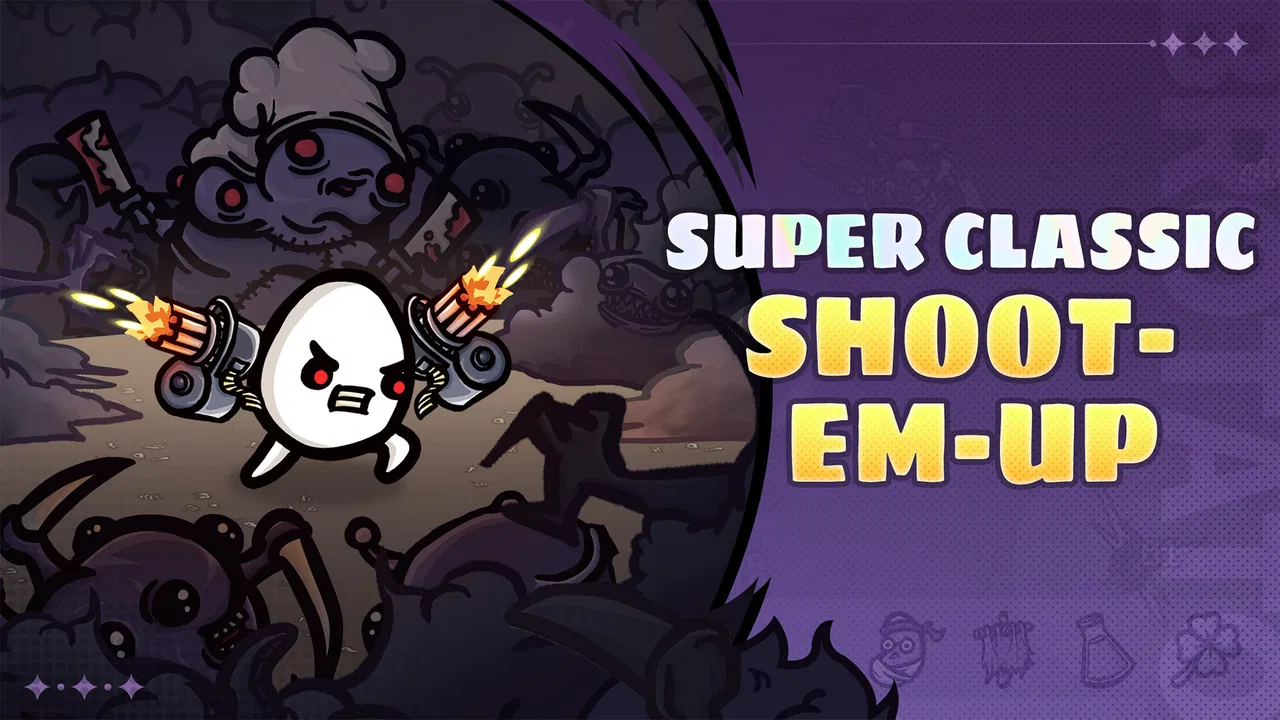
I went into Brotato expecting a quick mobile action game, and that is exactly where it feels most comfortable: short runs, constant movement, simple controls, and a lot of decisions packed into a small amount of time. You control a potato-like survivor while waves of aliens close in, collect weapons and upgrades between attacks, and try to build a setup that can survive the next escalation. It is easy to understand within minutes, but it has enough room for experimentation to keep a successful run from feeling completely routine.
This is a free action game from Erabit Studios, rated Everyone 10+, and it runs on Android devices using Android 6.0 or later. The current version is 1.3.790, and the game has built a strong audience with a 4.7 average from around 136 thousand ratings and over 5 million installs. Those figures do not automatically make a game good, but they match my impression that this is a polished, widely tested mobile adaptation rather than a throwaway wave shooter.
How the current version feels to play
The central loop is wonderfully direct. A run begins with a character, a small collection of weapons, and a battlefield filled with enemies. Your main job is to move, avoid danger, and let your equipment do its work while you look for openings. When a wave ends, you choose upgrades and prepare for the next one. That rhythm makes the game suitable for a quick break, yet the choices between waves give each session a sense of direction.
You May Also Like

 Blood Strike: 2.5 Anniversary
Blood Strike’s Loadouts Turn Every Drop Into a Tactical Gamble
A close look at Blood Strike’s custom loadouts: how fast access to signature weapons reshapes its battle royale rhythm, rewards preparation, and narrows the gap between fights.

 Pandora - Music & Podcasts
Pandora’s Music Is Easy to Start, but Harder to Recover
Pandora’s strength is its low-effort path from a seed to a station. Its weak spot is how much confidence it asks you to place in connection, setup, and quiet recovery.

 8 Ball Pool
 Is Built on Rivalries, Rematches, and Routine
A close look at the rivalries, rematches, shared routines, and unanswered safety questions that turn a quick pool match into a persistent mobile community.

 Samsung Music
’s Quiet Strength Is Playing What You Already Own
Its reach comes less from spectacle than from dependable access to a personal library. That simplicity is both the app’s strongest retention engine and its ceiling.

 AccuWeather: Weather Radar
AccuWeather Review: A Quick, Clear Forecast for Everyday Decisions
For everyday plans, the best forecast is the one you can understand quickly. AccuWeather makes rain timing, radar, and local conditions easy to act on, with a few trade-offs.

 Hill Climb Racing
Why Hill Climb Racing Still Turns Crashes Into One More Run
A tiny car, a bumpy hill and one more upgrade: Hill Climb Racing keeps resurfacing because its simple chaos makes every near-miss feel personal.
More From Our News Desk



What makes the game more interesting than a simple survival challenge is the tension between immediate safety and long-term planning. A weapon that helps you clear enemies now may not support the build you want later. An upgrade that looks modest on its own can become valuable when it complements your attack range, damage pattern, or defensive approach. I found myself making decisions based less on the biggest number and more on whether a new item would make the whole loadout work together.
The screen can become busy, especially when several enemy groups converge at once. That visual pressure is part of the appeal, but it also means that careless movement is punished quickly. I learned to stop treating every nearby pickup as automatically worth collecting. Sometimes the safer path is to keep moving around the edge of a crowd, wait for an opening, and return for rewards only when the route is clear.
The most important skill is not aiming; it is managing space. Weapons handle much of the attacking, so your attention belongs on positioning, enemy flow, and the escape routes that will still exist a few seconds later. That makes the game feel different from a conventional twin-stick shooter, where precise targeting usually dominates the experience. Here, movement and build choices carry more weight than twitch accuracy.
Why the upgrade loop has more depth than it first appears
At first, the between-wave screen can seem like a straightforward shopping stop. In practice, it is where most of the strategic identity of a run is created. I recommend deciding on a broad plan early instead of buying every attractive option. A character built around close-range attacks wants a different rhythm from one relying on distance, and mixing unrelated choices can leave you with a collection of individually decent tools that do not solve the same problems.
One useful habit is to judge an upgrade by the situation it fixes. If enemies are reaching you too easily, more offensive power may not be the answer; a defensive or mobility-oriented choice can buy the time needed to keep the run stable. If your character already clears ordinary enemies comfortably, improving the weakest part of the build is often smarter than adding another small boost to its strongest feature.
I also found it helpful to leave room for imperfect choices. The shop does not need to produce an ideal build every time for a run to be enjoyable. Adapting to what appears creates some of the best moments, particularly when an unexpected weapon combination changes how I move through the arena. That said, players who want complete control over every detail may find the randomness frustrating rather than exciting.
Controls, pacing, and the mobile fit
The control design suits a touchscreen because the action does not demand constant manual aiming. That reduces the usual problem of trying to steer and attack at the same time on a small display. I can play while standing in a queue or during a short commute, although I prefer a stable grip once the later waves become crowded. The game is quick to start and does not require the long commitment of a traditional campaign mission.
The pacing is one of its strongest qualities. A short session can still contain a full decision cycle: begin a run, survive several waves, make meaningful purchases, and see whether the build holds together. If I have more time, I can continue experimenting with another character or approach. This flexibility makes it easier to return to than action games that require a large uninterrupted block of time.
There is a trade-off, though. The compact structure can make repeated runs feel similar if you are not interested in testing different builds. The game rewards players who enjoy refining choices and learning from failure. Someone looking for a story-heavy adventure, elaborate exploration, or a large world to wander through will probably find the arena-based format too narrow.
What the game is like in an everyday situation
For me, the best use case is a ten-minute break when I want something more engaging than a passive distraction. I can start a run, focus on movement for a while, make a few upgrade decisions, and stop without feeling that I abandoned a complicated mission. It also works well when I want to test one idea rather than commit to a long play session: for example, I might prioritize a particular attack style and see how far that approach can go.
It is less suitable when I am multitasking heavily. The early moments may feel forgiving, but later waves require attention. Looking away from the screen at the wrong time can turn a stable run into a recovery problem. I would not choose it as background entertainment while watching a film, because the game eventually asks for active awareness rather than occasional taps.
Progress, value, and the experience for different players
The free entry point is a clear advantage. You can try the core game without paying first, which is important for a title built around repeated runs because its appeal depends on whether you enjoy the loop rather than on a single opening level. In-app purchases range from $0.49 to $149.99 per item, so I would advise checking the purchase screen carefully and deciding in advance whether you want to spend anything.
My recommendation is to treat optional spending as a convenience choice, not as part of the reason to install the game. The enjoyable part is learning how the systems interact and improving your decisions. If you prefer games where every unlock is earned only through play, the presence of purchases may bother you even if you never use them. Conversely, players comfortable with optional purchases may appreciate having flexibility, but should still keep an eye on the upper end of the listed range.
The age rating of Everyone 10+ makes it a reasonable choice for younger players who enjoy cartoon-style action, although parents should still consider whether the repeated combat and purchase options fit their household rules. The action is presented in a playful way, but the game remains focused on defeating waves of enemies, so it is not really a calm puzzle experience despite its cheerful visual identity.
Performance will depend on the phone, but the Android requirement of version 6.0 or later makes the compatibility range broad. On a modern device, the main concern is less about understanding the controls and more about whether the player likes the visual density of later encounters. If you have difficulty tracking many objects on a small screen, the busiest moments may be tiring even when the game is running properly.
Who will get the most from it
I would recommend it to players who like roguelite-style repetition, build experimentation, and action that becomes more demanding as a run develops. It is especially good for people who enjoy asking, “What happens if I combine these choices?” rather than following one fixed solution. The game also suits anyone who wants a portable alternative to longer action campaigns.
It is a particularly good fit if you enjoy improving through observation. After a failed run, there is usually something concrete to reconsider: perhaps you stayed in the center too long, invested in damage while ignoring survivability, or selected equipment that pulled the build in too many directions. That makes failure feel informative instead of completely arbitrary.
I would skip it if your priority is a strong narrative, persistent exploration, or a slow, carefully paced adventure. I would also be cautious if you dislike repeating similar combat spaces or making decisions under a shop’s limited selection. A traditional action game with manual aiming may be better for someone who wants every attack to come directly from their own input. A puzzle game may be a better choice for a player who wants low pressure and no escalating enemy crowds.
Three practical habits that improved my runs
First, I stopped chasing every reward immediately. Pickups are tempting, but moving into a bad position can cost more than the reward is worth. I now identify a safe loop around the arena and collect items when the enemy flow gives me a clear route. This small change made later waves feel much more manageable.
Second, I try to give each run a recognizable purpose. Instead of buying whatever appears, I ask whether the choice supports close combat, distance, durability, or a balanced approach. The build does not need to be perfect, but having a direction makes weak options easier to evaluate. It also teaches me which upgrades are genuinely useful and which only look impressive in isolation.
Third, I use early waves to test movement rather than assuming the build will carry me. If I cannot comfortably circle enemies before the pressure rises, I know that more damage alone may not solve the problem. This is a useful checkpoint: it tells me whether the character and equipment are giving me enough room to react, not merely whether enemies are being defeated quickly.
Where the current release still leaves room for improvement
The current version feels mature, but the basic structure has unavoidable limits. Runs are built from the same broad pattern of combat, rewards, and upgrades, so the long-term appeal depends heavily on how much variety you find in the available choices. Players who enjoy mastering a system can get a lot from that repetition; players who need a constant stream of new environments may reach their limit sooner.
The action can also become visually demanding. When several threats, pickups, and attacks occupy the same area, reading the safest route is not always effortless. That is not a flaw in the concept, but it can make the game less comfortable on smaller displays or for anyone who prefers a slower visual pace.
Another limitation is the distance between simple controls and complex decisions. The game is easy to operate, but that does not mean every choice is obvious. New players may buy upgrades without understanding how they affect the whole run, then blame randomness when the build collapses. The best way to learn is to experiment, but the process can feel opaque until you have completed enough runs to recognize the patterns.
The purchase range is another point worth considering. Free access makes trying the game easy, but the presence of expensive individual items means families and cautious players should use the normal device safeguards they already rely on. I would not let a child play without first discussing purchases, even though the age rating is relatively accessible.
How it compares with familiar alternatives
Compared with a conventional twin-stick shooter, this game asks less of your aim and more of your route planning. That makes it easier to play on a touchscreen, but it also means players seeking precise, deliberate shooting may find the combat less personal. Compared with a story-driven action game, it offers faster restarts and more replayable decision-making, while giving up narrative progression and a sense of traveling through a large world.
Against other wave-survival games, its strongest distinction is the way equipment choices shape the run. The combat is not only about lasting longer; it is about understanding how a collection of weapons and upgrades changes your movement and priorities. The trade-off is that the experience may feel less rewarding if you do not enjoy comparing builds and repeating attempts.
That makes the choice fairly clear. Pick this one when you want compact sessions, escalating pressure, and a playful system to experiment with. Choose a traditional shooter when manual accuracy is the main attraction, or a campaign-focused game when you want missions and story to carry you forward.
What I would watch as the game continues
The current release gives existing players a stable foundation, so future improvements would matter most if they deepen variety without making the core loop harder to read. I would be interested in how future updates handle the balance between familiar weapons and genuinely different ways to approach a run. More meaningful build identities would help experienced players keep discovering new strategies.
I would also watch the balance between accessibility and complexity. The game works because a new player can understand the immediate goal, while experienced players can think several upgrades ahead. Any evolution should preserve that quick readability. If the number of systems grows without clearer feedback, the shop and combat could become more confusing rather than more interesting.
For current users, the practical takeaway is simple: version 1.3.790 is worth approaching as a repeatable action sandbox, not as a one-time campaign. Try different directions, pay attention to positioning, and do not judge a build only by its strongest early moment. The game reveals its quality when it forces you to adapt.
My final recommendation
I enjoyed Brotato most when I treated each run as a small experiment. The controls are approachable, the waves create immediate pressure, and the upgrade decisions give the action enough strategy to prevent it from becoming mindless. It is not the right game for everyone, especially if you want a story, exploration, or completely predictable progression, but it is a strong choice for quick, replayable mobile action.
Erabit Studios has made something that fits the phone well without reducing the experience to a few empty taps. The free download makes it easy to test, and the broad Android compatibility helps more players get started. Just keep the purchase options in mind, expect some repetition, and be prepared to learn through failed runs.
My recommendation is to try it if you enjoy building a strategy while the action is already underway. Give it a few sessions rather than judging it after one attempt, because the appeal comes from noticing why a run worked, why another collapsed, and how one small change can alter the entire flow.
FAQs for Brotato
01What is Brotato and how does it work?
Brotato is a unique action-packed roguelike game where you play as a potato wielding up to six weapons at once to fend off waves of enemies. The game combines fast-paced shooting mechanics with strategic depth, allowing players to choose different builds and strategies to survive progressively difficult levels.
02Is Brotato available on both Android and iOS platforms?
Yes, Brotato is available for download on both Android and iOS platforms. You can find it on the Google Play Store for Android devices and the Apple App Store for iOS devices, ensuring a seamless gaming experience across both systems.
03What are the in-app purchase options in Brotato?
Brotato offers a variety of in-app purchases that enhance the gameplay experience. These include cosmetic upgrades, additional weapons, and character skins. While the game is enjoyable without spending money, these options allow players to customize their experience and support the developers.
04Does Brotato require an internet connection to play?
No, Brotato does not require an internet connection to play, making it an excellent choice for gaming on the go. Players can enjoy the full experience offline, although certain features, like leaderboards or updates, may require a connection.
05What are the system requirements to run Brotato smoothly?
To run Brotato smoothly, Android devices should have at least 2GB of RAM and a quad-core processor. iOS devices should be running iOS 10.0 or later. Ensuring your device meets these specifications will provide an optimal gaming experience without lag or crashes.
Pros
- Engaging and fast-paced gameplay.
- Variety of characters to choose from.
- Unique weapon combinations.
- Quick rounds for short play sessions.
- Fun graphics and animations.
Cons
- Limited storyline depth.
- Can become repetitive over time.
- Occasional difficulty spikes.
- Lacks multiplayer mode.
- In-app purchases can add up.

Brotato
Gallery